Remember the Rules
Same prompt
Human 15 min; AI 500 words; no edits
No human creative text in AI. Ever.
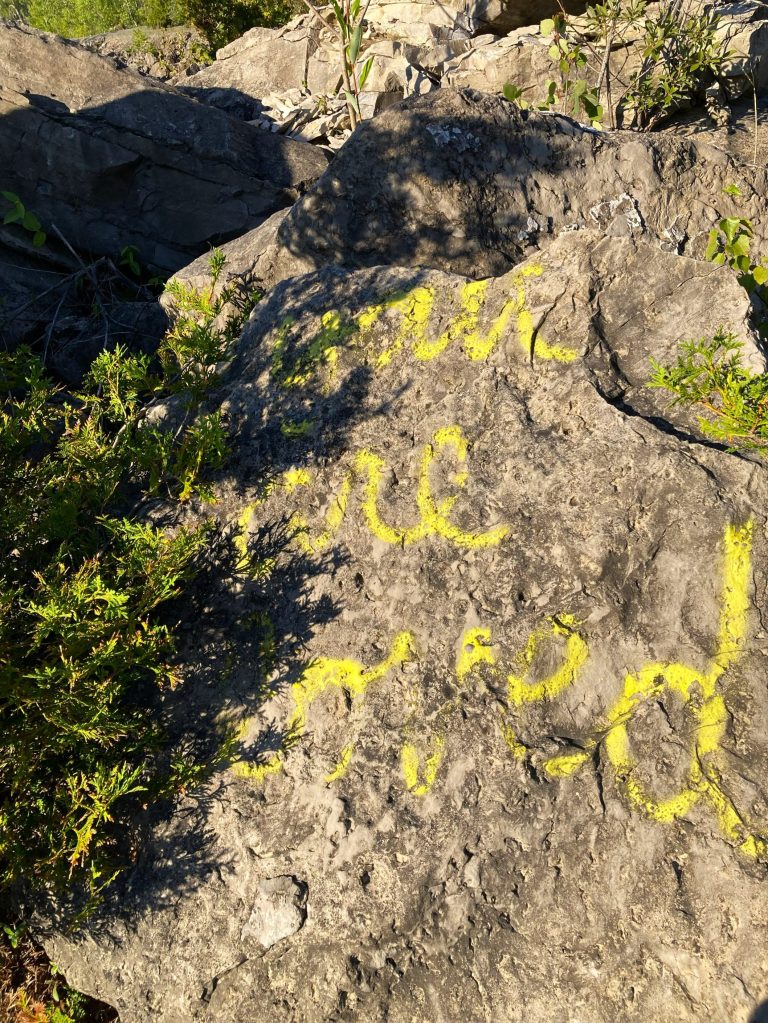
The Human
I still love you. Unbelievable maybe. But sometimes I think you, of anyone, would understand what it felt like to lose you. You, your heartbeat only barely distinct from my own, a part of me and not. It was love, of course, to not bring you here, and when I look around, I am so glad that you are not. I miss your giggle, your smile, your cries, your soft hair, even if they are all imaginary. But I do not miss the pain of watching your pain in this world. Funny that we have a word for patronizing and not matronizing. What is it when a mother takes the choice away because they think they know better? Perhaps it is nothing but mothering. I picked a name for you, did you know that? It was afterwards, so you would have never heard me whisper it. Not like the lullabies I hoped would soothe any fear you felt from hearing the world around us. Your name is my lullaby now. The sweet potatoes are sprouting. In a few months they can be dug up, baked, mashed into puree. You might have loved them or you might have spit them out. But I planted them for you.
The AI
My Dearest Eleanor,
I am writing this by the light of the kitchen window, the one that looks out over the garden you never let me mow properly. It is nearly midnight, and I should be asleep, but I keep thinking about the first time I saw you, so I thought I would tell you about it instead of counting sheep.
You were standing in the rain outside the Fitzgerald Public Library, arguing with an umbrella that refused to open. I remember thinking that you looked like you were losing a fight with the sky itself, and something about your stubbornness — the way you kept jabbing at that umbrella instead of just going back inside — made me cross the street without thinking it through. I offered you my umbrella. You looked at me like I had offered you a live snake.
“I don’t need saving,” you said.
“It’s not saving,” I said. “It’s just an umbrella.”
You took it anyway, and you never gave it back, and thirty-one years later it is still in the closet by the door, missing two ribs, and I have never once mentioned it because I think we both know it was never really about the umbrella.
I want to tell you about all the ordinary days, because I have come to believe they were the extraordinary ones. The Tuesday you learned to make my mother’s bread and burned it twice before getting it right. The years of packed lunches with notes tucked in the napkin, some silly, some just “I love you,” because I never trusted myself to say it enough out loud. The nights you fell asleep before the movie ended and I stayed up anyway, just to feel you breathing beside me.
I know the years have not been gentle to either of us. Your hands ache in the mornings now, and mine forget words sometimes when I’m searching for them. But when I look at you across the table, still stealing the good parts of the newspaper before I can read them, I do not see what’s gone. I see the woman who wouldn’t take help she didn’t need and married me anyway.
I don’t know how many more letters like this I’ll get to write you, Eleanor, and that is the truest thing I know how to say tonight. But I wanted you to have this one, in case I never manage to say it right when we’re both awake and the world is being loud around us.
Thank you for the umbrella you never returned. Thank you for thirty-one years of ordinary days. Thank you for arguing with the sky, right there in front of me, so I’d have a reason to cross the street.
I love you. I have loved you since the rain.
Yours, always and completely, Thomas
The Analysis
First, and this should go without saying, promise me–promise me–you won’t have AI write your love letters for you. Promise? Okay, good. Moving on.
We could get into the bits about clunky writing (“let me tell you about it”) and all that, but what stands out to me the most about this is the “meta” aspect of writing. Whenever I reflect on this, I hear my high school English teacher saying “form follows function” and my heart fills with warmth toward a certain JWG. Because, sure, there are some decent lines in what the AI has written, but it seems to fundamentally miss this aspect of the assignment. It wasn’t to write a love letter that contains a story, it was to let the letter be a story itself.
This harkens back to some of what I touched on in The Killer Butterflies–humans have a unique capacity to extend our writing beyond the page. In this case, through the juxtaposition of the love letter form and the abortion content in the human-written piece we learn something both about the mother-child relationship and the context surrounding it. This context is similarly supported by the subversion of expectations around sender and recipient (we expect to imagine someone writing a letter to their lover, we have a different image that comes to mind when we imagine a mother writing to her child). We don’t have that same access to context in the AI-written piece because the form itself doesn’t challenge reader expectations, nor does it complicate the content of the piece (now, if that love letter had been filled with all the reasons the sender was angry with their beloved, as my partner once gave to me in a Valentine’s Day card, the more traditional form of “letter from husband to wife” would be doing something more interesting) (although please don’t do that to your partner either, promise? Couples therapy is expensive). The AI seems to have missed the lesson that was impressed upon me in English class circa 2012: form follows function, function doesn’t follow form.
To recap on our promises:
- I will not use AI to write love letters for me.
- I will not put mean shit in Valentine’s Day cards. Unless they did something terrible like told my gay cousin they were going to hell or ran over my dog or something and it’s a breakup letter to end all breakup letters. Because form follows function.
 (w)ri(gh)t(e) for humans