Remember the Rules
Same prompt
Human 15 min; AI 500 words; no editing.
No human creative text in the AI. Ever.
The Human
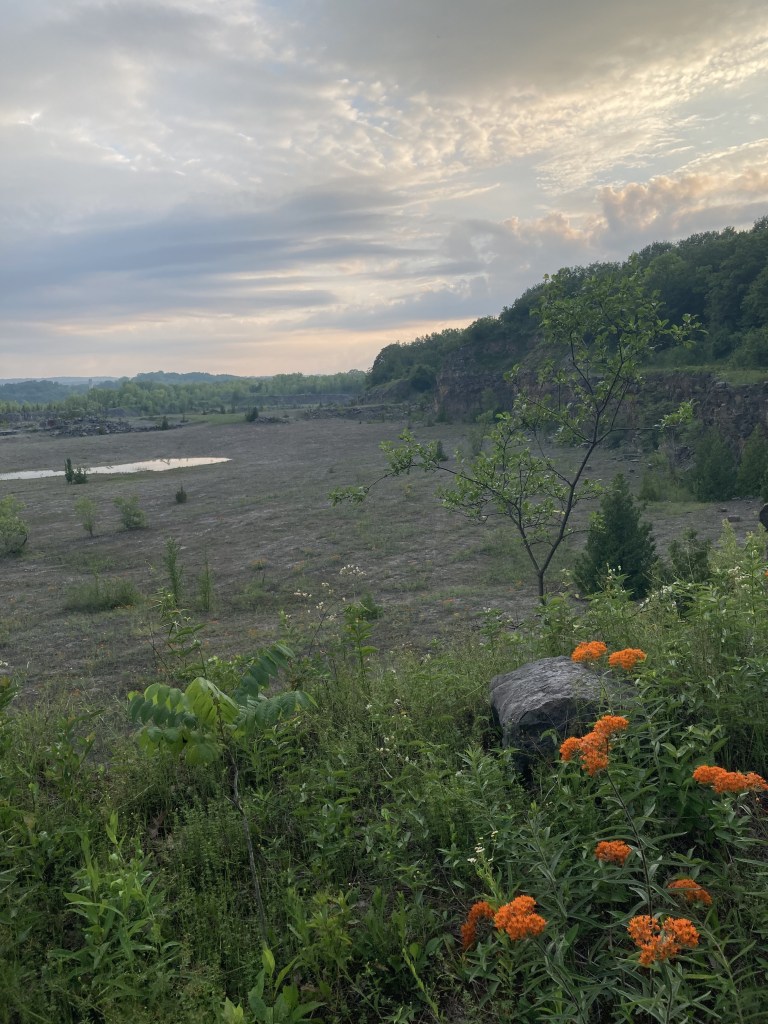
When the killer butterflies came to town, I realized just how little butterfly bandages resembled actual butterflies. The first time I tried to kill myself, they cauterized my veins and stitched up the skin and used those white plastic strips on the first, not-quite-right attempts. The blood in the bathtub had turned red, and a few droplets had dappled the bathroom rug before Claire found me and called the paramedics. She wanted to get rid of the rug, but it was otherwise quite nice, a dense weave with turquoise and white swirls. And, now, a few orange drops, red turned brown turned pale with the sunlight streaming through the bathroom for three years. The butterfly wings that land on the milkweed are orange and black and green. My neighbors have not yet tried to make me pull up the milkweed. Maybe they don’t know it attracts butterflies. Maybe they do and hope one of them will finish me off. Maybe they, too, are tired of living in this air that is too hazy to breathe.
It is strange, how easy it is to learn to live with death. Claire and I go for walks as the sun burns red, sinking toward the hills, or when the moon rises tinged the faint red brown of unsuccessfully bleached bloodstains. She has stopped commenting on my gardening. Maybe knowing that I would make her live this close to death is why she has stopped caring. Or maybe it is simply that the butterflies are beautiful.
The AI
When the killer butterflies came to town, nobody believed the weatherman’s warning. He’d cried wolf too many times — “polar vortex,” “record heat,” “biblical hail” — and the town of Miller’s Notch had learned to shrug at his forecasts and go about its business.
So when Doreen Vasquez saw the sky turn the color of a healing bruise, purple-yellow and strange, she just kept sweeping her porch.
The butterflies arrived at dusk, in a cloud so thick it dimmed the streetlights. They were beautiful, first — wings like stained glass, veined with gold, each one the size of a dinner plate. Children ran outside to see them. Old Mr. Petrosky got out his camera.
Then the first one landed on his arm and didn’t just land. It bit.
Not a sting. A bite, precise as a paper cut, and where it touched him a thread of blood welled up in a shape too neat to be accidental — a small, deliberate spiral.
By the time the sun fully set, half the town had spirals on their arms, their necks, the backs of their hands. Nobody had died. That was the strange part. The butterflies didn’t seem to want to kill anyone. They wanted something more particular than that.
“They’re drawing,” said Doreen’s daughter, Lucy, who was eleven and had always been better at seeing things than the adults gave her credit for. “Look. They’re drawing something on all of us.”
It took three days for the picture to make sense, because no one person carried enough of it. But when the town council finally lined everyone up in the gymnasium, arm to arm, mark to mark, the spirals resolved into a map. A crude one, but unmistakable: a compass rose, an old well symbol, and an arrow pointing due east, toward the abandoned quarry at the edge of town — the one that had swallowed twelve men in a cave-in back in 1954 and never given a single one of them back.
The mayor wanted to call in the state. The weatherman, vindicated and insufferable, wanted everyone to admit he’d been right about something for once. But it was Lucy who packed a flashlight and a coil of rope into her backpack and walked to the quarry alone that evening, because she was the only one who’d bothered to ask what the butterflies actually wanted, rather than simply screaming about what they’d done.
She found the old service door, rusted open just enough. She found the rope ladder someone — something — had left coiled and waiting at the top of the shaft, as if it had been down there resetting the invitation for seventy years and had simply been waiting for someone willing to read the mail.
The butterflies didn’t come back to Miller’s Notch after that. Nobody saw Lucy again, either — not exactly. But every October, when the light goes strange and purple-yellow at dusk, a single monarch finds its way to the Vasquez porch, lands on the railing, and waits there until Doreen comes outside to say hello.
The Analysis
Ah the killer butterflies. We’re starting with this one because I think it gets at the heart of what it means to imagine something. The AI takes what, at first glance, might appear to be the more creative, imaginative approach: there’s a fairy-tale, ghost-story-like structure to it with an attempt at a plot-based arc. The human’s, by contrast, is fairly quotidian. But note what the human writing does that the AI writing fails to do: it imagines an emotional response to the killer butterflies and inversely uses the imaginary butterfly concept to explore real life. What is the utility of the human imagination? Sometimes, it’s to solve problems, like what pitfalls we might experience when replacing our basement windows. The type of structural extrapolation and concept application the AI displayed in its response to the prompt might genuinely be useful in that sort of scenario (although did you really learn something if you didn’t get yourself into a situation there was no turning back from only to discover a hole in your foundation that prompted neighbor-shocking obscenities and an emergency facetime call with your dad?). But more often, our imagination allows us to anticipate how we might feel in a given situation in order to help us make decisions. This is the bedrock of self-preservation, empathy, and the pursuit of happiness. And this is what we practice when we read and when we write.
On a more technical level, notice how although the AI’s story might seem polished, there are inconsistencies: spirals can’t form an arrow and service doors are more commonly associated with mines than quarries (no, it doesn’t know anything about the quarry-themed photographs on this blog, as I have not used it in any way beyond providing the prompt results). Notice also that, although we have a sort of standard, regurgitated plot, we don’t actually have a motivation for the butterflies or a resolution to what they wanted. A virgin sacrifice? Why? That’s an awful lot of trouble for one victim.
Imagine how lonely it would be to only ever be able to hear one voice.
 (w)ri(gh)t(e) for humans